
Finding the right place to publish your work should not feel confusing. Many platforms make the process harder than it needs to be. Some ask for too many conditions before you can share your writing. Others place limits that make it difficult for new contributors to get started. UploadArticle.com offers a simpler path. It gives writers, bloggers, business owners, and curious thinkers a place to publish their work, share useful ideas, and connect with readers who are actively looking for clear and helpful information.
UploadArticle.com is built for people who want their writing to be seen. It is for someone with experience to share, a lesson to explain, a story to tell, or a point of view worth reading. Whether you write about business, health, education, technology, lifestyle, or science, this platform gives you room to speak in your own voice. The goal is simple: bring good writing and interested readers together in one place.
What makes this platform stand out is how straightforward it feels. You can create an account, build your profile, prepare your writing, and publish without dealing with a long, frustrating process. That matters because many writers lose momentum when the path to publishing becomes too technical or too strict. UploadArticle.com keeps the focus where it belongs: on useful writing, a smooth experience, and meaningful reach.
For readers, that means a growing collection of helpful posts across different subjects. For writers, it means a place where effort has a real chance to be discovered. The result is a publishing space that feels open, practical, and worth returning to.
What Is UploadArticle.com?
UploadArticle.com is an online publishing platform made for people who want to share original writing with a wider audience. It gives contributors a place to post useful content, build an online presence, and reach readers who care about the subjects being discussed. Instead of turning publishing into a complicated task, the platform keeps the process clean and approachable.
At its heart, UploadArticle.com is about access. A good platform should not make contributors feel like outsiders. It should make them feel welcome while still keeping basic quality standards in place. That balance matters. Writers need freedom, but readers also need trust. When both sides are respected, the whole experience becomes better.
This platform is not just for professional writers. It also works well for freelancers, educators, small business owners, researchers, specialists, and everyday people who have something useful to share. Some come to publish guides. Some want to explain industry trends. Some want to grow a personal brand. Others simply enjoy writing and want their work to live somewhere public and easy to discover.
A strong publishing platform also helps readers. Readers come online looking for answers, explanations, examples, and perspectives they can use. They do not want vague filler. They want writing that gets to the point, respects their time, and leaves them with something valuable. UploadArticle.com supports that kind of reading experience by encouraging clear structure, topic relevance, and practical value.
In simple terms, UploadArticle.com is a place where ideas can move from private drafts to public reading. It helps writers share their work and helps readers find something worth their time.
Why People Choose UploadArticle.com
There are many reasons someone may choose UploadArticle.com over other platforms. The first is ease. People want a place where they can get started without feeling buried under rules that slow them down. A smooth start matters, especially for new contributors who are still building confidence.
Another reason is clarity. Some websites feel crowded or difficult to understand. A contributor should not have to guess where to click, how to prepare a post, or what the next step should be. A simple structure removes hesitation and makes the experience feel natural.
People also choose UploadArticle.com because they want visibility. Writing takes effort. Research takes time. Good ideas deserve a chance to be seen. When someone publishes a strong piece, they want readers to find it, read it, and benefit from it. A publishing space should help that happen.
Trust is another big reason. A platform becomes more valuable when it encourages original work and keeps low-quality or misleading material from taking over. Writers want their names linked to a place that feels respectable. Readers want confidence that what they are reading has purpose and care behind it. That kind of trust builds slowly, but once it is there, it becomes one of the platform’s greatest strengths.
There is also the question of control. Writers often want the freedom to shape their work, refine it, and present it in a way that fits their style. A good platform gives that room without placing unnecessary walls around the creative process. UploadArticle.com supports that balance. It gives contributors space to publish while keeping the overall environment useful and readable.
In the end, people choose this platform because it respects time, effort, and purpose. It offers a simple way to publish, a practical way to be seen, and a reliable place to keep growing.
A Straightforward Way to Publish
One of the best things about UploadArticle.com is how easy it is to move from idea to live post. You do not need to feel like a technical expert to get started. The path is simple and clear, which makes the whole experience less stressful and more inviting.
The first step is to create your account. This gives you your place on the platform and opens the door to your contributor dashboard. Once that is done, you can build out your profile. A complete profile helps readers understand who you are, what you write about, and why your voice is worth following. Even a short and honest introduction can make a strong first impression.
After that, the focus moves to your writing. This is where your subject, style, and clarity matter most. A strong post usually begins with a clear purpose. It answers a question, explains an issue, solves a problem, or shares a useful point of view. Readers notice when the writing has direction. They also notice when it does not. That is why structure matters. Good headings, short paragraphs, and easy flow make the reading experience smoother from start to finish.
Formatting also plays a role. Clean presentation helps readers stay engaged. A strong title, clear subheadings, and helpful spacing can make a big difference. If relevant images or media help explain the subject, they can improve the reading experience even more.
Once your post is ready, publishing should feel like a natural final step, not a hurdle. UploadArticle.com is built to keep that part simple. The goal is to help useful writing go live without turning the process into a burden. That makes it easier for contributors to keep going, keep sharing, and keep improving with every new piece they publish.
A Place for New Writers and Experienced Voices
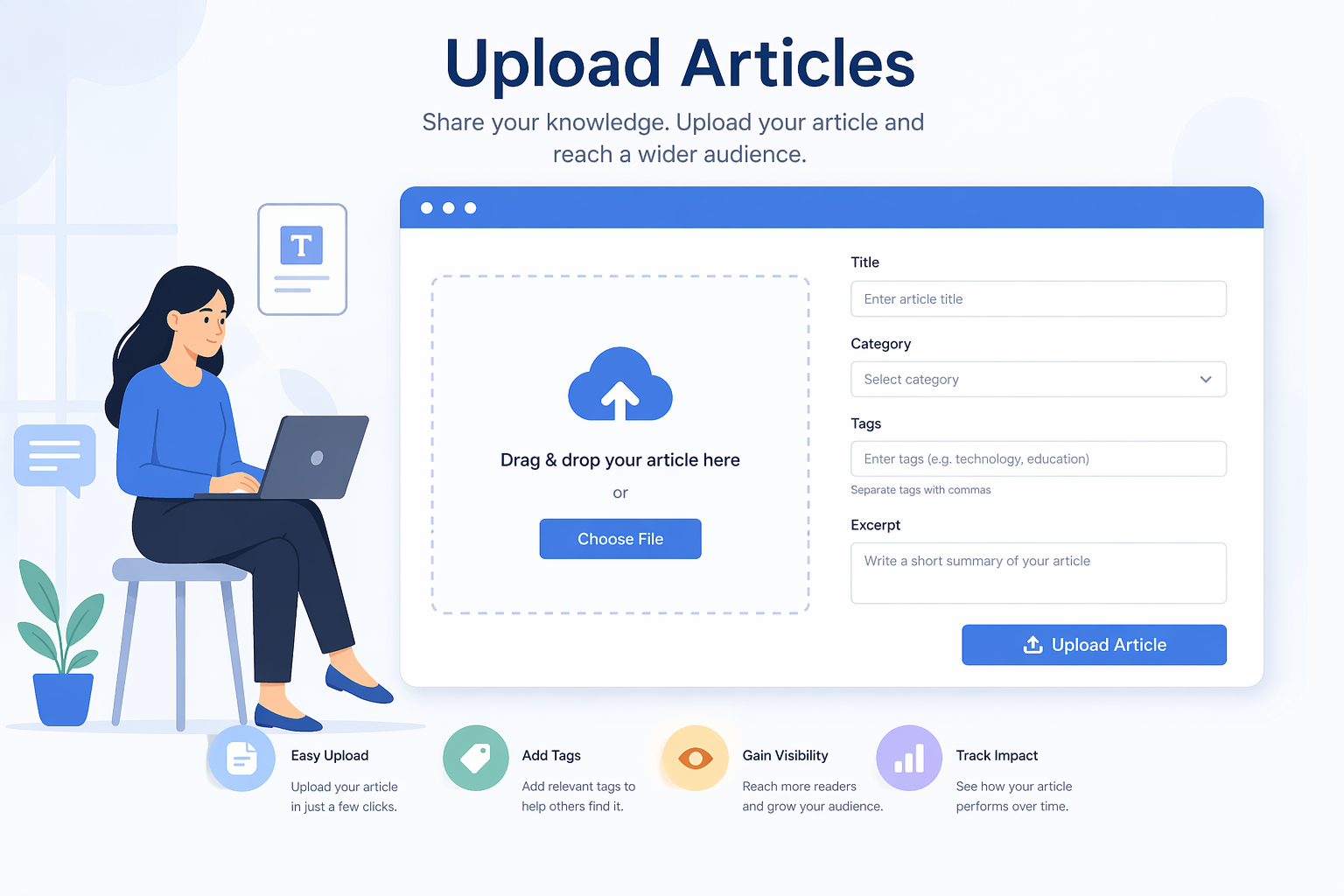
Not every contributor arrives with the same background. Some have been writing publicly for years. Others are just starting and want a place to begin. UploadArticle.com works for both.
For new writers, the platform offers a practical starting point. It gives them a place to publish real work, build confidence, and learn what readers respond to. That first published post often matters more than people realize. It turns writing from something private into something shared. It shows the writer that their words can live beyond a document on a screen.
For experienced contributors, the platform offers reach, flexibility, and room to expand. Someone who already writes regularly may want to publish in more than one place, connect with a wider audience, or build a stronger public footprint. UploadArticle.com supports that kind of growth by giving skilled contributors another place where their work can be read and remembered.
It also suits freelancers and consultants who want to show what they know. A well-written guide can quietly do a lot of work. It can build trust. It can show knowledge. It can make a reader think, “This person understands the subject.” That matters in professional life because reputation often grows through small, repeated proof. Good writing is one of the strongest forms of proof.
Business owners can benefit too. Many know their field well but do not always have a place to explain what they know in a useful, reader-friendly way. A publishing platform gives them that chance. It lets them share insight, answer common questions, and establish a more informed presence online.
That is one reason platforms like this matter. They are not only for “writers” in the traditional sense. They are for anyone with useful knowledge, real experience, and a willingness to share it clearly.
Topics That Belong Here
A good publishing space should never feel limited to one narrow subject. Readers are interested in many things, and contributors often have more than one area of expertise. UploadArticle.com supports a broad range of topics, which makes the platform more useful for both readers and writers.
Technology is one major area. People are always trying to understand tools, trends, updates, and digital changes that affect daily life and work. Clear writing in this space can help readers make smarter choices and stay informed without feeling overwhelmed.
Business is another natural fit. Readers look for practical guidance on growth, management, communication, branding, finance, and decision-making. Strong business writing is often simple, grounded, and useful right away.
Health also matters. People want trustworthy, readable explanations about wellness, routines, prevention, and day-to-day care. Writing in this area should be especially careful and responsible, because readers may use it to make personal decisions.
Lifestyle remains one of the most widely read areas online. This can include productivity, relationships, home life, habits, travel, and personal growth. Readers return to lifestyle writing when it feels honest, specific, and applicable to everyday life.
Education deserves space too. Good educational writing helps people understand difficult ideas, learn skills, prepare for challenges, or improve their methods. Clear teaching through writing is always valuable.
Science rounds out the picture by offering room for thoughtful explanation. People are curious about the world. They want complex subjects made understandable without being oversimplified. Good science writing helps close that gap.
A platform becomes stronger when it allows this variety while still encouraging clarity and usefulness. That mix gives readers more reasons to return and gives contributors more freedom to write about what they know best.
What Good Writing Looks Like on UploadArticle.com
Every platform has its own tone, even when it does not force one. On UploadArticle.com, the strongest writing tends to share a few qualities. It is original. It is clear. It respects the reader’s time. And it gives something useful rather than filling space for no reason. The platform’s current messaging also points to originality, readability, and basic quality standards as part of what it wants to maintain.
Original writing matters because readers can tell when a piece has thought behind it. They can also sense when something has been stitched together without care. Fresh writing feels more human. It has a viewpoint. It has shape. It has a reason for existing.
Clarity is just as important. The best writing is not always the most complex. In fact, strong writing is often simple. It uses familiar words, steady flow, and clean structure. It says what it means without wandering too far away from the point.
Accuracy matters too. Readers trust what they read more when it feels careful and responsible. That does not mean every piece has to sound formal or academic. It simply means the writer should avoid careless claims and make an honest effort to present the subject well.
Usefulness is what ties it all together. A strong post should leave the reader with something. It might be a better understanding. It might be a practical tip. It might be a clearer next step. But there should be some value at the end. Readers remember writing that gives them something they can keep.
That is the kind of work that belongs here: thoughtful, readable, useful, and real.
Why Visibility Matters for Writers
Writing is personal, but publishing is public. Once something is shared, it has the chance to do more than sit quietly in a folder. It can help someone. It can answer a question. It can start a conversation. It can reflect the writer’s knowledge in a way that feels lasting.
That is why visibility matters. Writers put time into shaping an idea. They revise sentences. They cut weak parts. They try to make the whole piece stronger. A platform should give that effort a fair chance to reach people. UploadArticle.com supports that by giving contributors a place where their work can be discovered and explored over time. The site also frames itself around helping writers build an online presence and reach interested readers.
Visibility matters for practical reasons too. A published body of work can help someone build credibility in their field. It can support freelance work, open professional conversations, and strengthen a writer’s public identity. Even one good post can lead to something unexpected when the right reader finds it at the right time.
There is also personal value in being read. Many people write because they care about ideas. They care about explaining things well. They care about being useful. When their work reaches real readers, that effort feels worthwhile. It turns writing into something active rather than hidden.
This is one of the quiet strengths of a good publishing platform. It does not just host writing. It gives it a life outside the writer’s screen.
A Practical Home for Growing Your Presence
For many contributors, publishing is not only about one post. It is about building something over time. A profile grows stronger with each useful piece. A body of work becomes more meaningful when readers can move from one post to the next and see consistency, care, and range.
UploadArticle.com supports that long-term growth by giving contributors a place where their work can live together under one name. The platform’s current setup includes contributor-focused pages and profile-driven publishing, which makes that kind of public presence more natural to build.
That matters because readers often want more than one good post. If they like what they read, they may look for more from the same person. A complete profile and a thoughtful collection of published work make that easy. Over time, this helps a contributor become familiar rather than random. Familiarity builds trust. Trust brings return readers.
This is useful for professionals as well. A consultant, coach, teacher, specialist, or business owner can use writing to show depth and clarity. Instead of only saying what they know, they can demonstrate it. That kind of demonstration is powerful because it feels earned rather than claimed.
A strong presence is usually built in small steps. One clear post leads to another. A useful guide leads to a stronger profile. A regular habit creates a body of work. Over time, that public record becomes part of how people see and remember you.
Made for Readers Too
A publishing platform should never think only about contributors. Readers matter just as much. If readers do not enjoy the experience, even strong writing can go unnoticed.
That is why readability matters. Clean formatting, sensible organization, mobile-friendly presentation, and straightforward navigation all improve the reading experience. The current UploadArticle setup also emphasizes readable formatting, media support, and cross-device access, which are all important for keeping readers engaged.
Readers often arrive with a purpose. They want an answer, a guide, a clearer view of something, or a fresh perspective. They appreciate writing that respects their time. They also appreciate a platform that does not distract them with unnecessary friction.
When a reader finds one useful post, they are more likely to stay and explore another. That is how a stronger reading environment is built. It starts with one good experience and grows through consistency. A good platform supports that by making useful writing easy to find and easy to read.
This is where a publishing site proves its value. It is not only a place to upload work. It is a place where writing can actually be read with comfort and purpose.
Standards That Protect the Platform
Openness is valuable, but openness without standards rarely works well. If a platform allows spam, copied material, or misleading content to take over, good contributors and serious readers start to leave. That is why basic standards matter.
UploadArticle.com currently presents itself as a space that values original work and pushes back against plagiarism, spam, false information, and other low-trust material. That kind of protection benefits everyone involved. Writers gain a better environment for their names and work. Readers gain more confidence in what they find.
Standards do not have to feel heavy-handed to be useful. In fact, the best standards often work quietly. They simply protect the space from becoming cluttered, careless, or misleading. A good platform does not need to make publishing feel difficult. It only needs to protect the balance between openness and trust.
That balance is one reason people continue returning to a platform over time. They feel there is room to contribute, but they also feel the space still has shape and purpose. That makes all the difference.
Start Writing on UploadArticle.com
Every writer starts somewhere. Sometimes the hardest part is not the writing itself. It is choosing where to begin. UploadArticle.com gives you a simple place to take that first step or continue the work you have already started.
If you have a useful idea, a clear explanation, a personal insight, or a subject you know well, this platform gives you room to share it. You do not need to wait for the perfect moment. You do not need to overcomplicate the process. You need a clear purpose, honest writing, and a willingness to publish something that may help the next person who finds it.
Good writing does not have to be loud. It only has to be real, readable, and useful. When that kind of writing meets the right platform, it has a chance to travel further than expected.
UploadArticle.com is built for that meeting point. It brings writers and readers together in a space that feels practical, open, and worth using again. If you are ready to share your work, build your public presence, and publish with confidence, this is a strong place to begin.
FAQs
Frequently Asked Questions (UploadArticle.com)
What is UploadArticle.com?
Is UploadArticle.com free to use?
Who can publish on UploadArticle.com?
How do I get started on UploadArticle.com?
What kind of topics can I publish?
Do I keep ownership of my writing?
Can I add links in my post?
Is it good for building visibility online?
Does it accept all types of writing?
Why do writers choose UploadArticle.com?
How can I contact UploadArticle.com?
What makes UploadArticle.com different from other publishing platforms?
Its current messaging focuses on keeping publishing simple while removing barriers that are common on some other platforms. It specifically emphasizes easier submission, faster access to readers, and fewer complications around posting and content control.